Research Guides
What Is SNAP-8? Acetyl Octapeptide-3 Research Guide
By NUPEPS Research TeamNovember 15, 2026
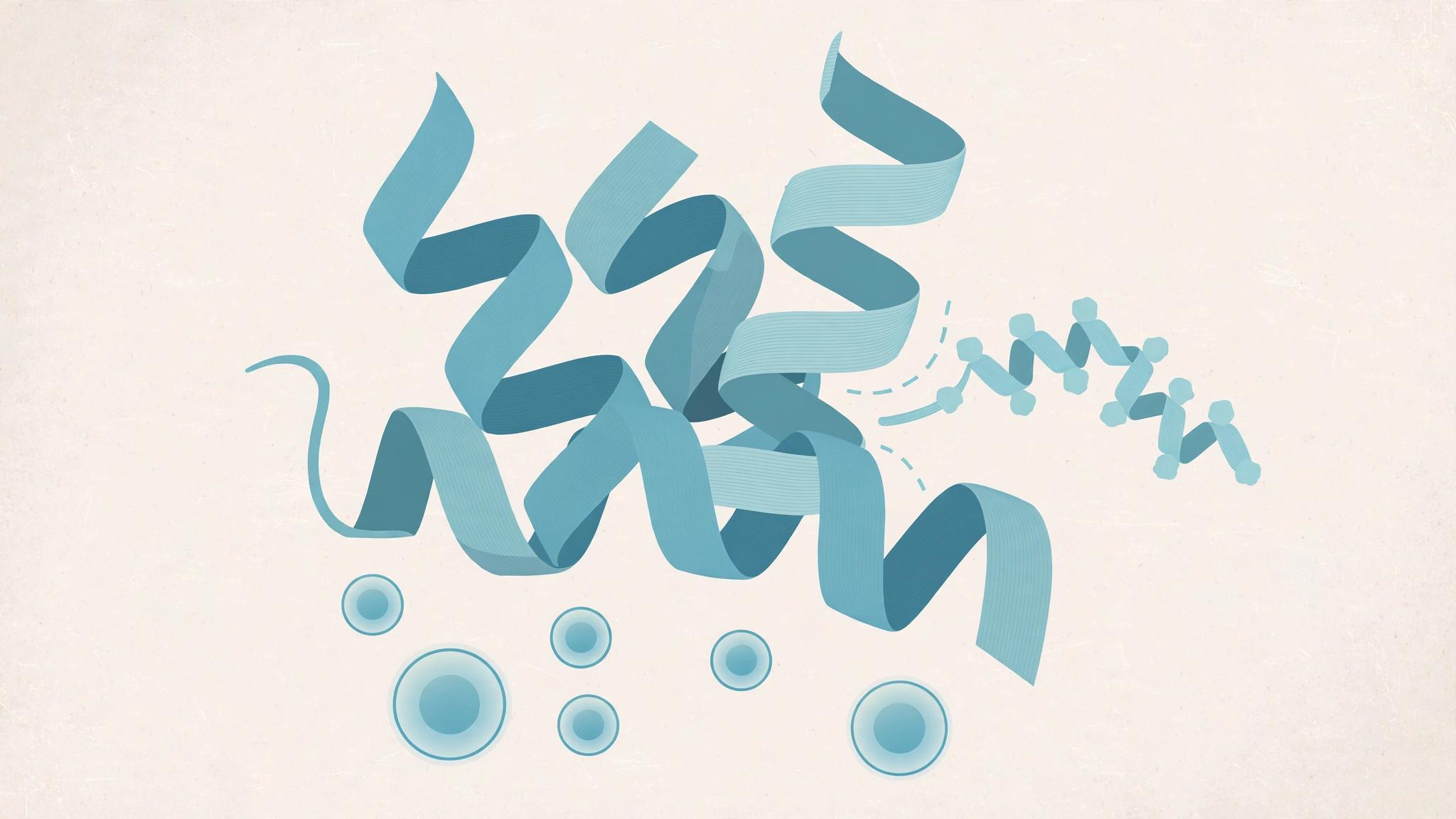
SNAP-8 is a synthetic eight-amino-acid cosmetic research peptide, listed in ingredient records as acetyl octapeptide-3. It was designed to copy the opening segment of SNAP-25, a protein in the SNARE complex that releases acetylcholine at nerve endings, so laboratories can study how a competing fragment changes vesicle release in cell models.
SNAP-8 is the longer successor to Argireline, the six-amino-acid peptide built on the same idea. Both molecules come from the same developer lineage, and both are cosmetic ingredients rather than drugs. This guide reviews what SNAP-8 is, how its SNARE mechanism is studied, how it differs from Argireline, what the evidence actually shows, and how laboratories verify the material.
What Is SNAP-8, Exactly?
SNAP-8 is an octapeptide with an acetyl group at its N-terminus and an amide at its C-terminus. Those two caps are part of the defined molecule: they protect the ends of the chain and they are part of the structure that analytical verification has to confirm, alongside the eight-residue sequence itself.
- Full name: Acetyl octapeptide-3; also listed as acetyl glutamyl heptapeptide-1
- Length: 8 amino acids, N-acetylated and C-terminally amidated
- Sequence: Ac-Glu-Glu-Met-Gln-Arg-Arg-Ala-Asp-NH2
- Molecular weight: Approximately 1,075.2 g/mol
- Molecular formula: C41H70N16O16S
- CAS number: 868844-74-0
- Developer: Lipotec, now part of Lubrizol Life Science
- Design basis: A lengthened copy of the N-terminal segment of SNAP-25
The sequence explains the design at a glance. The first six residues are exactly Argireline's sequence, and SNAP-8 adds alanine and aspartate at the end. A laboratory comparing the two is therefore comparing one binding idea at two lengths, which is why the pair appears together throughout the cosmetic-peptide literature.
Where Does SNAP-8 Come From?
SNAP-8 was developed as a second-generation version of Argireline, the hexapeptide introduced in the early 2000s as a topical cosmetic ingredient modeled on SNAP-25. The foundational paper for the family showed that a SNAP-25 fragment could inhibit neurotransmitter release in cell systems, establishing the mechanism both peptides were built to exploit.
Citation: Blanes-Mira C, et al. A synthetic hexapeptide (Argireline) with antiwrinkle activity. International Journal of Cosmetic Science. 2002. [PubMed PMID: 18498523](https://pubmed.ncbi.nlm.nih.gov/18498523/)
Extending the chain by two residues was a deliberate binding wager. A longer copy of the SNAP-25 segment covers more of the surface the natural protein uses when it joins the SNARE complex, so the developer's expectation was stronger competition for the same slot, tested first in cell assays rather than in people.
How Does SNAP-8 Interact With the SNARE Complex?
Acetylcholine leaves a nerve ending when three proteins assemble into the SNARE complex: SNAP-25 and syntaxin on the cell membrane, and synaptobrevin on the vesicle membrane. Their assembly pulls the vesicle into the membrane and lets its contents out. SNAP-8 is studied as a competitive fragment in that assembly step.
Because SNAP-8 copies part of SNAP-25, it can occupy the position the full protein would take, and a complex built around the fragment does not drive vesicle fusion as efficiently. In chromaffin-cell assays, the standard laboratory model for this release step, SNAP-8 reduced catecholamine release, and the developer reported stronger inhibition than Argireline at matched concentrations in the same assay family.
Two limits frame that mechanism honestly. SNAP-8 does not cut or destroy SNAP-25, so its action in a model is competitive and reversible, not enzymatic. And at about 1,075 g/mol it is a large, water-loving molecule, so how much of it crosses intact skin in a formulation is a separate, unresolved question from whether it works in a cell assay.
How Do SNAP-8 and Argireline Compare?
| Feature | SNAP-8 | Argireline |
|---|---|---|
| Ingredient name | Acetyl octapeptide-3 | Acetyl hexapeptide-8 |
| Length | 8 amino acids | 6 amino acids |
| Sequence | Ac-Glu-Glu-Met-Gln-Arg-Arg-Ala-Asp-NH2 | Ac-Glu-Glu-Met-Gln-Arg-Arg-NH2 |
| Molecular weight | Approximately 1,075.2 g/mol | Approximately 889 g/mol |
| CAS number | 868844-74-0 | 616204-22-9 |
| Shared mechanism | SNAP-25 mimicry, SNARE competition | SNAP-25 mimicry, SNARE competition |
| Evidence depth | Manufacturer data plus limited combination-product research | Larger published record, including a placebo-controlled study |
The table shows the real trade-off. SNAP-8 is the longer mimic with the stronger cell-assay story, while Argireline is the smaller molecule with the deeper published record behind it. Neither fact cancels the other, and a researcher choosing between them is choosing which of those two properties matters more for the experiment being designed.
What Does the Published Evidence Actually Show?
The figure most often quoted for SNAP-8 — a wrinkle-depth reduction above sixty percent — comes from the developer's own technical dossier, not from a peer-reviewed trial. In that small study the average reduction was roughly thirty-five percent, and the sixty-plus figure was the best single result. The dossier was not independently replicated, and it should be read as manufacturer data.
Peer-reviewed coverage of SNAP-8 itself is thin. Reviews of topical peptides discuss the SNAP-25 mimic family as a class, and the one later human study involving SNAP-8 tested it inside a multi-ingredient dissolving patch, so its individual contribution cannot be separated from the other ingredients in that product.
Citation: Gorouhi F, Maibach HI. Role of topical peptides in preventing or treating aged skin. International Journal of Cosmetic Science. 2009. [DOI: 10.1111/j.1468-2494.2009.00497.x](https://doi.org/10.1111/j.1468-2494.2009.00497.x)
Read plainly, the record supports a plausible mechanism demonstrated in cell assays, plus early cosmetic-formulation data generated mainly by the ingredient's developer. It does not include an independent, placebo-controlled trial of SNAP-8 alone, and no regulator has approved SNAP-8 as a drug for any purpose. Those are the boundaries a laboratory should design within.
How Is SNAP-8 Used in Laboratory Research Today?
Within those boundaries, SNAP-8 has defined laboratory roles that follow from its design:
- SNARE-complex assays: a competitive SNAP-25 fragment for vesicle-fusion and neurotransmitter-release models.
- Comparative peptide studies: run against Argireline to test whether chain length changes activity in the same system.
- Cosmetic-formulation research: a defined ingredient for studying peptide stability and delivery in topical systems.
- Release-assay reference work: a comparator in chromaffin-cell and neuronal exocytosis experiments.
In each role, the peptide's identity is the experimental variable. A preparation missing its acetyl cap, or carrying a deleted residue from the arginine-rich middle of the sequence, is a different molecule in the same assay, which is why verification is not a formality for this compound.
How Do Researchers Verify SNAP-8 Material?
Two analytical checks are standard. Mass spectrometry should confirm a molecular identity consistent with the full capped octapeptide at approximately 1,075.2 g/mol; that mass also separates SNAP-8 cleanly from Argireline at about 889 g/mol, a difference of roughly 186 mass units. Reversed-phase HPLC quantifies purity against deletion sequences and other synthesis-related impurities.
Researchers therefore look for a batch-specific Certificate of Analysis documenting HPLC purity and mass spectrometry identity for the exact batch supplied. NUPEPS PEPTIDES publishes batch Certificates of Analysis for its research materials, available at nupeps.com/coas, and our guide to reading a peptide COA explains how to check one line by line. NUPEPS PEPTIDES tests every batch for purity, quantity, and sterility.
SNAP-8 Research Material at NUPEPS PEPTIDES
NUPEPS PEPTIDES supplies SNAP-8 as a lyophilized research material, SNAP-8 10MG, for laboratory and in vitro research use only. Each batch is accompanied by its Certificate of Analysis, so the material can be matched to its analytical record before it enters an experiment. SNAP-8 is supplied strictly as a research chemical; it is not a drug, and it is not for human or veterinary use.
Frequently Asked Questions
What is SNAP-8 in simple terms?
SNAP-8 is a synthetic eight-amino-acid peptide, acetyl octapeptide-3, that copies part of SNAP-25, a protein nerves use to release acetylcholine. It was developed as a cosmetic research ingredient and is studied in cell models of vesicle release and in topical formulation research, not as a medicine.
What is the difference between SNAP-8 and Argireline?
Length and record. SNAP-8 has eight amino acids — Argireline's six plus alanine and aspartate — and a molecular weight of about 1,075 g/mol against Argireline's roughly 889 g/mol. The developer reports stronger cell-assay inhibition for SNAP-8, while Argireline has the larger published human research record of the two.
Did SNAP-8 reduce wrinkle depth by over sixty percent?
That figure is the best single result in the developer's own small dossier study, where the average reduction was roughly thirty-five percent. The study was manufacturer data, not a peer-reviewed or independently replicated trial, and it does not establish what SNAP-8 does as a standalone ingredient in general use.
Is SNAP-8 an approved drug?
No. SNAP-8 is a cosmetic ingredient and a research chemical. It is not approved by the FDA or any other regulator as a drug for any indication, and research-grade material is sold only for laboratory and in vitro use.
How can a researcher check SNAP-8 quality before an experiment?
Ask for the batch-specific Certificate of Analysis and check two things: mass spectrometry identity matching the expected molecular weight of about 1,075.2 g/mol for the full capped octapeptide, and HPLC purity of at least 99 percent for the batch actually supplied. A generic specification sheet that is not tied to the batch is not a substitute.
Conclusion
SNAP-8 is a clean example of rational peptide design: take the binding segment of a release protein, lengthen it by two residues, and test whether the longer copy competes better. The cell-assay record supports the design idea, while the human evidence remains early and mostly manufacturer-generated, and an honest guide keeps those two layers separate.
For laboratories sourcing SNAP-8 today, the standard that matches its literature is documentation: identity confirmed by mass spectrometry for the full capped construct, purity of at least 99 percent by HPLC, and a Certificate of Analysis issued for the specific batch in hand. Material verified that way can be used with confidence in the experiments the peptide was characterized for. This article is educational material about a research compound and is not medical advice.
Frequently asked questions
Is What Is SNAP-8? Acetyl Octapeptide-3 Research Guide for human use?
No. All compounds discussed in this guide are strictly for laboratory research use only. Not for human or veterinary use.
Where can I find the Certificate of Analysis?
Certificates of Analysis are available in our COA library. Each batch is third-party tested for purity and identity.
How should research compounds be stored?
Store according to the vial label instructions. Generally, lyophilized compounds should be kept in a cool, dry place away from light. Refer to the specific product documentation for details.
All products are intended strictly for laboratory research and in-vitro use only. Not for human or veterinary consumption, diagnostic, or therapeutic use. Products are not drugs, foods, cosmetics, or dietary supplements and may not be misbranded, misused, or mislabeled.