Research Guides
Best Growth Hormone Secretagogues for Research (2026)
By NUPEPS Research TeamNovember 15, 2026
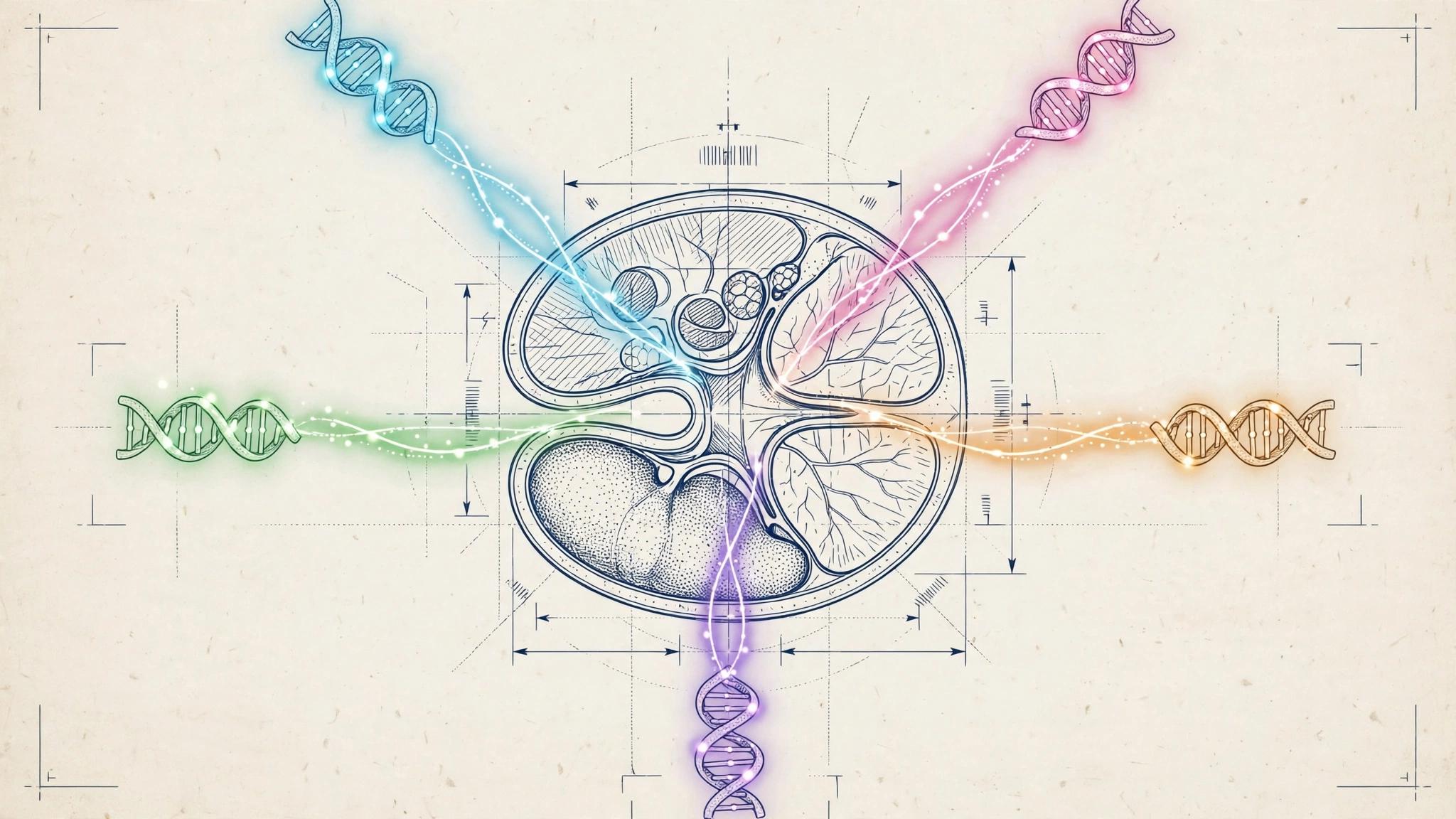
The growth hormone secretagogues with the strongest published research records are tesamorelin, the only compound in the class with a full regulatory trial program behind it, followed by sermorelin and CJC-1295 No DAC on the growth hormone-releasing hormone pathway, and ipamorelin and GHRP-6 on the ghrelin-receptor pathway. The five split cleanly into those two receptor families.
That split is the organizing fact of the class. Secretagogues do not release growth hormone themselves; they signal the pituitary to release its own, through one of two receptors. This guide ranks the five catalog compounds by published evidence depth, compares their structures and pathways, and explains how a laboratory verifies each one, with dedicated guides on this site covering each compound in full.
How Were These Secretagogues Selected and Ranked?
The ranking criterion is the published research record available to a laboratory choosing a growth-hormone-axis compound: whether controlled human trials exist, how specific the receptor pharmacology is, and how completely the compound's identity can be verified analytically. Popularity, testimonials, and claimed outcomes in people were excluded, because none of them is evidence a laboratory can design an experiment around.
Only compounds in the NUPEPS PEPTIDES research catalog are listed, and only compounds whose primary literature is growth-hormone secretion research. The two ghrelin-pathway compounds and the three GHRH-pathway compounds are ranked together but described separately, because a rank across pathways is a ranking of evidence depth, not a claim that the pathways are interchangeable in an experiment.
The Five Secretagogues at a Glance
| Rank | Compound | Pathway | Length | Primary research focus | Evidence depth |
|---|---|---|---|---|---|
| 1 | Tesamorelin | GHRH receptor | 44 amino acids | GH-axis signaling and visceral adipose research in a defined clinical population | Deepest of the five: Phase III randomized trials and a regulatory approval for a specific pharmaceutical product |
| 2 | Sermorelin | GHRH receptor | 29 amino acids | GHRH(1-29) fragment pharmacology and GH-axis diagnostic research history | Substantial: decades of literature and a former approved diagnostic and therapeutic product history |
| 3 | CJC-1295 No DAC | GHRH receptor | 29 amino acids, four substitutions | Stabilized GHRH(1-29) analog research; pulsatile GH signaling models | Moderate: strong analog-design literature; the long-acting DAC form carries most of the human trial record |
| 4 | Ipamorelin | Ghrelin receptor (GHS-R1a) | 5 amino acids | Selective ghrelin-receptor agonism without ACTH or cortisol activity in models | Moderate: one landmark selectivity characterization, animal and limited human pharmacology work |
| 5 | GHRP-6 | Ghrelin receptor (GHS-R1a) | 6 amino acids | The original ghrelin mimetic; reference agonist for the receptor system | Foundational but older: the compound that defined the receptor, with an unselective profile by modern standards |
Read as a set, the table shows a class with one clinically developed anchor, two well-documented GHRH fragments behind it, and a ghrelin pair whose value is pharmacological rather than clinical: one selective modern agonist and one historic reference compound. The sections below grade each record on its own terms.
1. Tesamorelin — What Does the Research Record Show?
Tesamorelin preserves the full 44-amino-acid sequence of native GHRH and adds a trans-3-hexenoyl group at its N-terminus to slow breakdown. At approximately 5,135.9 g/mol (CAS 218949-48-5), it is by far the largest compound in this comparison, and it carries the class's most complete development history.
Its pivotal program tested a pharmaceutical tesamorelin product in adults with HIV-associated lipodystrophy, where randomized, placebo-controlled trials measured visceral adipose tissue over months of study. That program led to a United States approval in 2010 for that specific product and population. The approval belongs to the regulated product; research-grade tesamorelin is a laboratory material, and our tesamorelin research guide reviews the record in full.
Citation: Falutz J, et al. Metabolic effects of a growth hormone-releasing factor in patients with HIV. New England Journal of Medicine. 2007.
2. Sermorelin — What Does the Research Record Show?
Sermorelin is GHRH(1-29) itself: the shortest fragment of the native hormone that retains full activity at the GHRH receptor, at approximately 3,357.9 g/mol (CAS 86168-78-7). Unlike the modified analogs below, sermorelin carries no stabilizing substitutions, so its record is the baseline record for the whole GHRH-fragment family.
Sermorelin has a long regulated history as a pharmaceutical product, including use in growth-hormone diagnostic testing, before its manufacturer withdrew the product for commercial reasons. Its literature spans decades of GH-axis research, and it remains the reference point against which stabilized fragments are compared. Our dedicated sermorelin research guide covers its GHRH(1-29) record in detail.
3. CJC-1295 No DAC — What Does the Research Record Show?
CJC-1295 No DAC, also called Modified GRF (1-29), takes sermorelin's 29-amino-acid frame and substitutes four residues to resist enzymatic degradation, at approximately 3,368 g/mol. It is a short-acting, pulsatile GHRH-receptor agonist, and it must not be confused with CJC-1295 with DAC, a different molecule built to bind albumin and circulate for days.
That distinction decides how its evidence is read. The best-known human trial data in the CJC-1295 name — sustained growth hormone and IGF-1 elevation after a single administration — belong to the DAC form. The No DAC form's own record is the analog-design and preclinical literature, plus its widespread use as the GHRH half of dual-pathway experiments alongside ghrelin-receptor agonists, a pairing our CJC-1295 vs ipamorelin comparison examines directly.
4. Ipamorelin — What Does the Research Record Show?
Ipamorelin is a five-amino-acid ghrelin-receptor agonist, Aib-His-D-2-Nal-D-Phe-Lys-NH2, at approximately 711.9 g/mol (CAS 170851-70-4) — the smallest compound on this list by a wide margin. It was developed at Novo Nordisk specifically to keep the GH-releasing potency of the older GHRP compounds while removing their off-target hormone effects.
Its landmark 1998 characterization showed exactly that selectivity: in the models studied, ipamorelin released growth hormone with potency comparable to GHRP-6, but did not significantly raise ACTH or cortisol even at exposures far above its GH-releasing level, a profile its authors described as the first selective growth hormone secretagogue. Later development, including a postoperative gut-motility program, did not reach approval, and ipamorelin remains a research compound.
Citation: Raun K, et al. Ipamorelin, the first selective growth hormone secretagogue. European Journal of Endocrinology. 1998. [PubMed PMID: 9849822](https://pubmed.ncbi.nlm.nih.gov/9849822/)
5. GHRP-6 — What Does the Research Record Show?
GHRP-6 is the original member of the family: a six-amino-acid peptide, His-D-Trp-Ala-Trp-D-Phe-Lys-NH2, at approximately 873.0 g/mol (CAS 87616-84-0), developed at Tulane University in the early 1980s. It released growth hormone through a receptor nobody had yet identified, mimicking a hormone — ghrelin — that was not isolated until 1999.
That history is its ranking logic. GHRP-6 is the reference agonist against which the ghrelin-receptor system was defined, and it remains a standard comparator in receptor assays. Its profile is also the unselective original: appetite signaling is intrinsic to its ghrelin mimicry, and at higher experimental exposures the older literature reports activity on prolactin and cortisol pathways that selective successors were designed to avoid. Our GHRP-6 research guide reviews that record in full.
How Do the Five Compare Mechanistically?
| Compound | Receptor | Molecular weight | Defining design feature | CAS number |
|---|---|---|---|---|
| Tesamorelin | GHRH receptor | ~5,135.9 g/mol | Full-length GHRH(1-44) with an N-terminal trans-3-hexenoyl group | 218949-48-5 |
| Sermorelin | GHRH receptor | ~3,357.9 g/mol | Unmodified GHRH(1-29), the minimal fully active fragment | 86168-78-7 |
| CJC-1295 No DAC | GHRH receptor | ~3,368 g/mol | GHRH(1-29) with four stabilizing substitutions; no albumin-binding DAC | 863288-34-0 |
| Ipamorelin | Ghrelin receptor (GHS-R1a) | ~711.9 g/mol | Pentapeptide engineered for GH selectivity over ACTH and cortisol | 170851-70-4 |
| GHRP-6 | Ghrelin receptor (GHS-R1a) | ~873.0 g/mol | Original hexapeptide ghrelin mimetic with two D-amino acids | 87616-84-0 |
Two patterns stand out. On the GHRH side, the three compounds are one idea at three levels of engineering: the native fragment, the stabilized fragment, and the full-length stabilized hormone. On the ghrelin side, the pair runs the other way through time: the unselective original first, then the selective redesign built specifically to correct it.
What Does the Evidence Not Show?
No compound on this list has been shown to build muscle, reduce body fat, or improve performance in healthy people in controlled trials. The deepest record here, tesamorelin's, concerns a specific pharmaceutical product in a specific clinical population with a defined fat-distribution condition. Extending any of these records to general use in healthy people is a claim the literature does not make.
With the exception of the specific regulated products described above, none of these compounds is an approved drug, and all five are supplied by NUPEPS PEPTIDES strictly as research chemicals for laboratory and in vitro use. A laboratory reading this listicle should take from it a map of where published work exists and how deep it runs, which is the only ranking the evidence supports.
How Do Researchers Verify Secretagogue Material?
Verification follows the same two-check standard as every research peptide. Mass spectrometry should confirm molecular identity against the expected weight for the compound — a check with unusual separating power in this class, where the five compounds range from about 712 to about 5,136 g/mol and even the two closest, sermorelin and CJC-1295 No DAC, differ measurably because of the four substitutions. Reversed-phase HPLC quantifies purity against synthesis-related impurities.
For the GHRH analogs, one confusion deserves a specific check: CJC-1295 No DAC and CJC-1295 with DAC are different molecules with different masses, and the batch record is what proves which one is in hand. NUPEPS PEPTIDES publishes batch Certificates of Analysis for its research materials, available at nupeps.com/coas, and our guide to reading a peptide COA explains how to check one line by line. NUPEPS PEPTIDES tests every batch for purity, quantity, and sterility.
Secretagogue Research Material at NUPEPS PEPTIDES
NUPEPS PEPTIDES supplies all five compounds as lyophilized research materials: Tesamorelin 10MG, Sermorelin 10MG, CJC-1295 No DAC 10MG, Ipamorelin 10MG, and GHRP-6 10MG, each for laboratory and in vitro research use only and each accompanied by its batch Certificate of Analysis. A combined CJC-1295 No DAC / Ipamorelin blend is also supplied for laboratories studying the two pathways together. None of these materials is a drug, and none is for human or veterinary use.
Frequently Asked Questions
What is the best-studied growth hormone secretagogue?
By published record, tesamorelin. It is the only secretagogue here with a Phase III randomized trial program and a regulatory approval, granted to a specific pharmaceutical product for HIV-associated lipodystrophy. That record concerns the regulated product and population, not research-grade material or general use.
What is the difference between GHRH analogs and ghrelin mimetics?
The receptor. GHRH analogs such as tesamorelin, sermorelin, and CJC-1295 No DAC act at the GHRH receptor, copying the hypothalamic hormone that drives growth hormone release. Ghrelin mimetics such as ipamorelin and GHRP-6 act at the ghrelin receptor, GHS-R1a. The pathways converge on the same pituitary cells from different directions, which is why the two classes are often studied together.
Are growth hormone secretagogues the same as growth hormone?
No. Secretagogues are signaling compounds that prompt the pituitary to release its own growth hormone in experimental systems. They are not growth hormone, they do not replace it, and their research records describe signaling and secretion measurements, not the effects of administering growth hormone itself.
Why is GHRP-6 ranked last if it is the original secretagogue?
Because the ranking criterion is the depth and selectivity of the published record, not historical importance. GHRP-6 defined the ghrelin-receptor field and remains its reference agonist, but its profile is unselective by modern standards, and the selective compounds developed after it were designed specifically to improve on it.
How can a researcher check secretagogue quality before an experiment?
Ask for the batch-specific Certificate of Analysis and check two things: mass spectrometry identity matching the expected molecular weight for the named compound, and HPLC purity of at least 99 percent for the batch actually supplied. For CJC-1295, the record should also make clear whether the material is the No DAC form or the distinct DAC form.
Conclusion
Ranked by research record, the secretagogue field has a clear shape: tesamorelin's regulated trial program at the top, the two GHRH fragments behind it, and the ghrelin pair valued for pharmacology — ipamorelin for selectivity, GHRP-6 as the reference compound that started the field. Two receptors explain the whole class, and the evidence map, stated with its limits, is what a laboratory actually needs.
Whichever compound a study calls for, the sourcing standard is the same: identity confirmed by mass spectrometry, purity of at least 99 percent by HPLC, and a Certificate of Analysis issued for the specific batch in hand. Material verified that way can be used with confidence in the experiments the compounds were characterized for. This article is educational material about research compounds and is not medical advice.
Frequently asked questions
Is Best Growth Hormone Secretagogues for Research (2026) for human use?
No. All compounds discussed in this guide are strictly for laboratory research use only. Not for human or veterinary use.
Where can I find the Certificate of Analysis?
Certificates of Analysis are available in our COA library. Each batch is third-party tested for purity and identity.
How should research compounds be stored?
Store according to the vial label instructions. Generally, lyophilized compounds should be kept in a cool, dry place away from light. Refer to the specific product documentation for details.
All products are intended strictly for laboratory research and in-vitro use only. Not for human or veterinary consumption, diagnostic, or therapeutic use. Products are not drugs, foods, cosmetics, or dietary supplements and may not be misbranded, misused, or mislabeled.